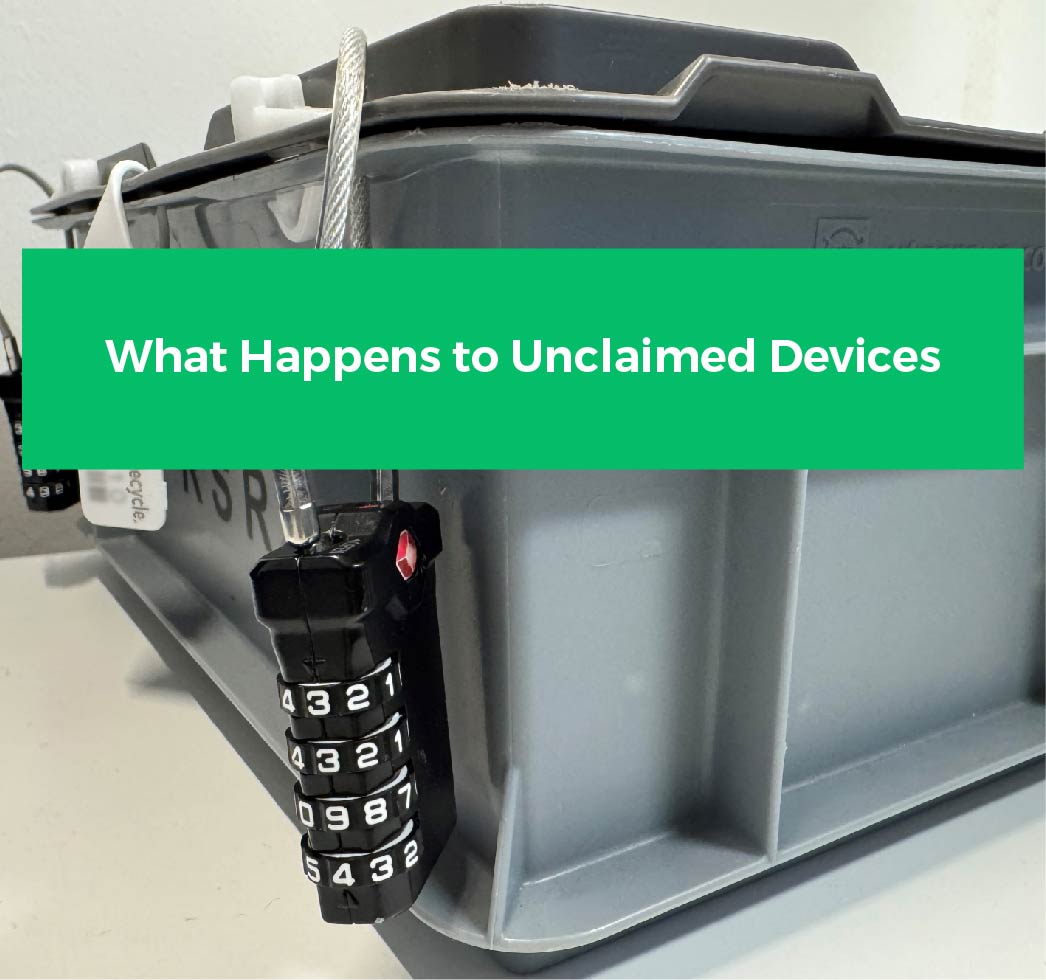
Large transport hubs process high volumes of lost property every day – including phones, laptops, tablets, wearables, digital cameras and related accessories. Some items are reunited with their owners quickly. Others remain unclaimed throughout the holding period and move into unclaimed status.
At that point, the operational question becomes: what happens next?
For unclaimed electronic devices, the answer matters because these items often contain personal data. The device may be out of sight, but the data protection obligation remains until lawful processing can be evidenced.
After the holding period: ownership may change, responsibility does not disappear
Once the statutory holding period ends, the organisation may become the lawful owner of the device under its lost property procedure. However, legal ownership is not the same as lawful data processing.
The key requirement is being able to demonstrate that unclaimed devices were handled through an evidencable process: controlled custody, certified outcomes and a documented audit trail.
Where risk commonly appears in practice
In many organisations, unclaimed devices can be:
- stored across multiple locations
- moved inconsistently between teams
- processed without item-level traceability
- handled through unclear disposal routes
When visibility breaks, defensibility breaks. The difficulty is not only what happened – it is proving what happened.
What good looks like: a documented lifecycle
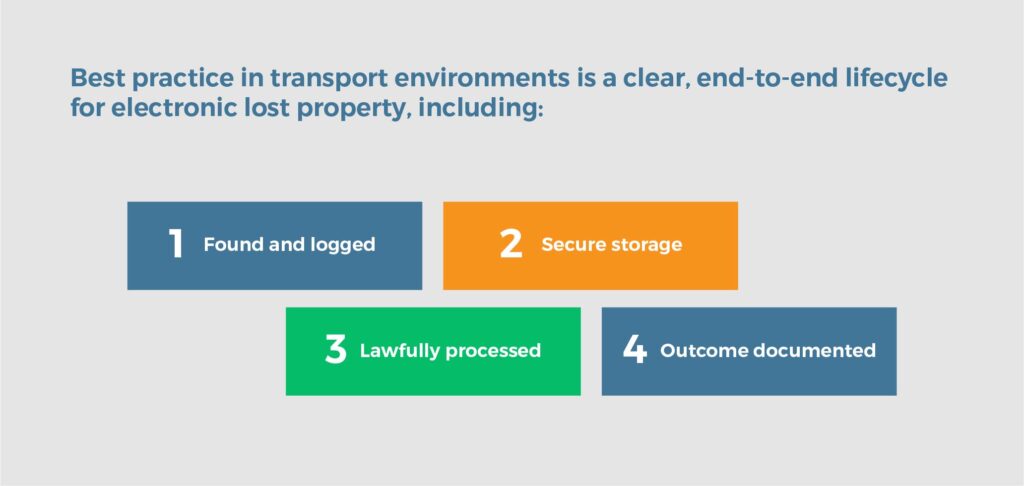
For transport environments, best practice is a clear end-to-end lifecycle for electronic lost property, including:
- found and logged (item-level ID)
- securely stored during holding period
- due diligence checks and police quarantine where required
- lawful processing with certified outcomes
- a complete audit trail for every item
This creates a defensible record of due diligence if any query arises in future.
Why outcomes matter: reuse, quarantine and WEEE processing
Depending on device condition and accessibility:
- devices may be processed through certifiable data erasure (where technically possible)
- devices reported lost or stolen may require quarantine / police liaison
- devices that cannot be processed for erasure due to damage may require WEEE Directive compliant destruction
What matters is that the outcome is lawful, documented and auditable.
Conclusion
Unclaimed electronic devices are not a minor operational issue. They are data-bearing items that require controlled custody and evidence-led processing.
Transport operators that can demonstrate documented chain of custody and certified outcomes are far better placed to evidence due diligence, reduce risk and protect public trust.