

For transport operators, unclaimed electronic devices and accessories can create a compliance issue that sits in plain sight. Phones, laptops and tablets may be found on vehicles, platforms, depots and customer service locations every day. Even where devices are locked, damaged or never reclaimed, the personal data they contain remains subject to UK GDPR.
In this context, compliance is not determined by intention. It is determined by evidence. When organisations are challenged – by internal audit, legal, insurers or the ICO – the question is simple: can you demonstrate due diligence over what happened to the device?
That is why certifiable data erasure and audit trails matter.
Evidence is what makes compliance defensible
UK GDPR expects organisations to demonstrate appropriate technical and organisational measures. In practice, that means having documented evidence of how data-bearing devices were handled, processed and disposed of.
If an organisation cannot evidence what happened to a device, it becomes difficult to defend the process later – even if the organisation believes it acted responsibly at the time.
Why informal approaches create an evidential gap?
In many operational environments, electronic lost property is handled through mixed processes: decentralised storage, multiple handovers, inconsistent logging and reliance on informal disposal routes.
The risk is not only mishandling – it is the absence of a provable record. Without item-level traceability and certified outcomes, organisations are left with assumptions rather than evidence.
What certifiable data erasure actually means?
Certifiable data erasure is a structured, standards-based process that removes data in a verifiable way. Unlike informal deletion methods, certifiable erasure produces a documented record confirming the outcome.
Where erasure is technically possible, the result should be supported by certification. Where erasure is not possible due to damage or inaccessibility, lawful processing requires an alternative certified outcome (such as WEEE Directive compliant destruction).
Why audit trails matter just as much as erasure?
Erasure alone is not enough. Organisations also need to evidence chain of custody: where the device came from, when it was received, who handled it, what controls were in place, and what final outcome occurred.
A proper audit trail provides a defensible record across operational, legal and compliance contexts.
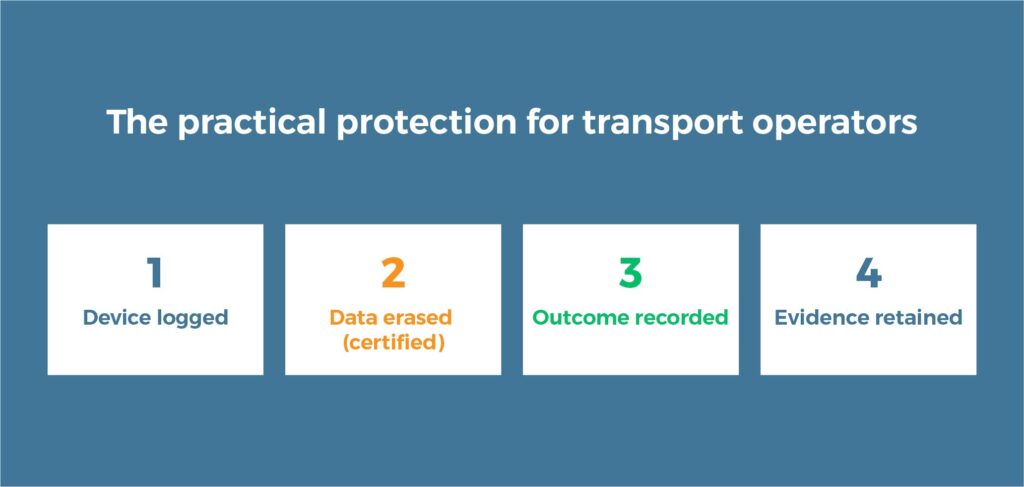
The practical benefit for transport operators
For transport operators managing lost property at scale, certifiable erasure and audit trails provide:
- a repeatable, low-burden process
- reduced GDPR exposure through documented due diligence
- audit-ready evidence for internal governance
- clearer supplier assurance for procurement and compliance teams
In short: it becomes possible to demonstrate control, even in complex and decentralised operating environments.
